


Ajustes a la concepción de política pública para la población de vendedores informales Public Policy Adjustments for the Informal Vendor Population
Main Article Content
-
Cristian Hernández Gil
Competing Interests
None
 https://orcid.org/0000-0001-6512-2453
How to Cite
Recibido: 2 de octubre de 2025; Aceptado: 13 de abril de 2026; : 14 de mayo de 2026
Resumen
Problemática: el aumento de la venta informal en la vía pública de Florencia ha ocasionado una disminución en cuanto a su posibilidad de ser considerada un destino ecoturístico. Objetivo: determinar las condiciones de los vendedores informales en el espacio público de dicha región, estableciendo razones que justifican la desaprobación del proyecto de acuerdo de política pública. Metodología: se hizo uso de un diseño mixto, con encuestas con vendedores informales (263 participantes de 820 en total) y grupo focales, con la aplicación de paramétricos como la prueba t y el análisis de contenido. Resultados: los resultados revelan que los ajustes a la política pública deben estar orientados al perfil del vendedor informal y a aspectos relacionados con la reubicación permanente y autorizada, el apoyo económico para los negocios y para aquellas personas que no están en edad de laborar. Conclusión: los hallazgos revelan la necesidad de generar confianza en la población sobre su futuro y su proyecto de vida, con nuevas circunstancias que propendan por su bienestar y por mejorar la imagen del territorio. Contribución/originalidad: se expone una realidad social y productiva que debe ser considerada en la formulación de políticas públicas, desde el orden nacional, relacionadas con economía popular.
Palabras clave
descentralizacion, isdel, desarrollo local, planificación, municipios, descentralizacion, isdel, desarrollo local, planificación, municipios, economía de la salud, política de la salud, servicio de salud, sistemas de salud, reforma de la atención de salud. Clasificación JEL: P46, I1, A12, economía de la salud, política de la salud, servicio de salud, sistemas de salud, reforma de la atención de salud. Clasificación JEL: P46, I1, A12, mercado de trabajo, informalidad, economía regional, política de empleo. Códigos JEL: J46, O17, C25, mercado de trabajo, informalidad, economía regional, política de empleo. Códigos JEL: J46, O17, C25, diversidad cognitiva, condiciones organizacionales, análisis factorial confirmatorio, cultura organizacional inclusiva, diversidad cognitiva, condiciones organizacionales, análisis factorial confirmatorio, cultura organizacional inclusiva, control interno, modelo coso, gobernanza, empleo público, meritocracia, control interno, modelo coso, gobernanza, empleo público, meritocracia, desarrollo local, desempleo, espacio público, gestión de los asuntos públicos, trabajo informal, desarrollo local, desempleo, espacio público, gestión de los asuntos públicos, trabajo informal.Abstract
Problem statement: The increase in street vending in the city of Florencia has diminished its potential to be considered an ecotourism destination. Objective: To assess the conditions of informal vendors in public spaces in that region, identifying the reasons that justify the rejection of the proposed public policy agreement. Methodology: A mixed-methods design was used, involving surveys of informal vendors (263 participants out of a total of 820) and focus groups, with the application of statistical tests such as the t-test and content analysis. Results: The results reveal that adjustments to public policy must be tailored to the profile of the informal vendor and address aspects related to permanent and authorized relocation, economic support for businesses, and support for those who are not of working age. Conclusion: The findings reveal the need to build trust among the population regarding their future and life plans, under new circumstances that promote their well-being and improve the image of the region. Contribution/originality: This study highlights a social and productive reality that must be considered in the formulation of national public policies related to the popular economy.
Keywords
Decentralization, isdel, Local Development, Planning, Municipalities, Decentralization, isdel, Local Development, Planning, Municipalities, Health economics, Health policy, Health services, Health Systems, Health Care Reform. JEL Classification: P46, I1, A12, Health economics, Health policy, Health services, Health Systems, Health Care Reform. JEL Classification: P46, I1, A12, Labor mobility, employment policy, regional economy, labor market. JEL Codes: J46, O17, C25, Labor mobility, employment policy, regional economy, labor market. JEL Codes: J46, O17, C25, Cognitive diversity, Organizational conditions, Confirmatory factor analysis, Inclusive organizational culture, Cognitive diversity, Organizational conditions, Confirmatory factor analysis, Inclusive organizational culture, Internal Control, COSO Model, Governance, Public Employment, Meritocracy, Internal Control, COSO Model, Governance, Public Employment, Meritocracy, local development, unemployment, public space, management of public affairs, informal employment, local development, unemployment, public space, management of public affairs, informal employment.Introducción
La economía informal, a nivel latinoamericano, se ha fortalecido para enfrentar los altos índices de desempleo en los territorios. Esta se caracteriza por la proliferación de actividades que carecen de una normatividad reglada y cuyo enfoque principal es la contribución económica familiar a partir de la venta callejera, generando traumatismos en las vías públicas, de índole urbano y rural, y desmejorando la imagen de cada metrópoli desde una óptica turística. Giraldo et al. (2023) explican que la economía popular se establece en mercados locales, en articulación con procesos comunitarios que permiten la construcción social del hábitat, reconociendo el papel de todos los integrantes de la población de informales que generan esfuerzos para garantizar la subsistencia de sus hogares mediante la obtención de ingresos, realizando trabajos sin una remuneración justa y asumiendo todos los elementos del desarrollo de su negocio, pero sin una debida planeación dentro de los principios de la productividad y la presentación de propuestas de valor claras. En otras condiciones, se instaura una subordinación entre quien tiene el poder sobre cualquier factor de producción, como el capital, y quien asume la labor de dependiente, en un acuerdo por comisión o salario sin las condiciones legales apropiadas. La relación mercantilista de explotación ( Giraldo, 2017 ) que allí se genera traduce el desarrollo de la informalidad desde el abaratamiento de los productos y por ende la reducción de las ventas. El informal entrega su vida al servicio del sistema y de la dinámica comercial, con una demanda que ha sido saturada por el incremento de opciones populares, que en ocasiones llegan a ser delictivas ( Giraldo, 2022 ). A partir del interés por reconocer las dimensiones sobre las cuales la población vulnerable genera ingresos, se analiza la informalidad desde un marco no reglamentado por corporaciones de comercio, a nivel territorial, y por las obligaciones tributarias nacionales que configuran el compromiso empresarial para fomentar el desarrollo tanto local como regional. Este término parte de los trabajos de Hart (1973) , citado por , quien inicialmente lo definió como oportunidades informales de ingresos, para que luego la International Labour Organization – ILO (2002) incluyera otros conceptos como empleo informal y empleo sin protección laboral o social, tanto dentro como fuera de las empresas informales. Luego se abordó la informalidad como el conjunto de actividades, a pequeña escala, con gran facilidad de entrada como negocio, dependencia de los recursos, propiedad familiar, bajo nivel de operaciones, tecnología intensiva en mano de obra y adaptada, habilidades adquiridas fuera del sistema escolar formal y los mercados no regulados y competitivos ( Charmes, 2016 ). Para Vanegas-Chinchilla et al. (2023) , este concepto tienes sus implicaciones, no solamente en lo normativo, sino también en la conformidad cultural, lo que devela actividades ilegales, pero legítimas, debido a que son percibidas como deseables (apropiadas) dentro del sistema socialmente construido de normas, valores, creencias y definiciones ( Suchman, 1995 citado por Vanegas-Chinchilla et al., 2023 ). Sin duda alguna, dentro de esta investigación el concepto asociado a la informalidad se aleja de las atribuciones de ilegalidad e ilicitud, estando de por medio el establecimiento de una cultura que socialmente acepta algunas prácticas derivadas de entender el acceso a los recursos desde diferentes modalidades y la supervivencia de cada habitante en el largo plazo. Por ende, la economía informal parte de la indagación de intercambios de bienes y servicios entre naturales y comerciales, las cuales no se encuentran documentadas por entidades de control estatal, por más de que se requiera entender su dinámica como corporaciones económicas particulares y poco conocidas ( Franck, 2012 ). En Colombia, se estima que las tres cuartas partes de la población que reside en zonas urbanas crecerá hasta el 85 % en el año 2050 ( Ministerio del Interior y Ministerio del Trabajo, 2022 ). Lo anterior señala a que, a largo plazo, alrededor del 40 % de los colombianos se ubicará en regiones principales, forjando demandas mayores de bienes y servicios sociales, culturales, públicos y económicos, especialmente en el mercado laboral en sus dos vertientes, formal e informal. A esto se le suma la incidencia de la informalidad, que para el trimestre móvil junio-agosto llegó al 56 % a nivel nacional ( ), lo cual, en vista de las altas tasas de desempleo y la vulnerabilidad social y económica, genera más razones para conducir a las personas a buscar su propio bienestar implementando ventas informales en el espacio público. Según el Decreto 1072 de 2015, existen diferentes argumentos que enmarcan el desarrollo de la venta informal. Por un lado, está el económico, el cual considera que las personas requieren al menos una fuente de ingresos para vivir, por lo que, valiéndose de las condiciones de acceso al empl eo, deciden establecerse forzosamente en espacio público para la distribución de bienes de cualquier tipología. También se mencionan argumentos de oportunidad, que tienen que ver con factores de espacio y tiempo, como la elección en el número de horas de realización de la actividad comercial y la simplicidad para trasladarse de un lugar a otro, hallando espacios con mayor afluencia de peatones. Por otro lado, existen argumentos generacionales, que evocan la posibilidad de seguir la tradición de la venta callejera (proceso de relevo de los padres a sus hijos), con explicaciones relacionadas a los simbolismos que este tipo de actividades informales representan en las expresiones culturales del territorio, las cuales deben ser aprobadas (desde la concepción de los implicados) por la costumbre civil como parte del compromiso del Estado para otorgarles garantías de subsistencia a través del mínimo vital. En términos más recientes, la Ley 1988 de 2019 estableció los lineamientos para formular, implementar y evaluar la política pública en torno a la población de vendedores informales en Colombia. Tres años más tarde, en 2022 se sancionó el Decreto 801, el cual adoptó este instrumento para su debida puesta en marcha en las entidades territoriales. Su objetivo principal corresponde a la “disminución de los niveles de pobreza y desigualdad, relacionados con el fenómeno de las ventas informales en el espacio público” ( Ministerio del Interior y Ministerio del Trabajo, 2022, p. 68 ), a partir de aspectos como: la reducción de la vulnerabilidad en el espacio público, la prevención de conflictos que disminuyen el capital social y económico y el mejoramiento de la imagen estatal en los programas a favor de una cultura ciudadana. La ciudad de Florencia no fue ajena a este desafío, por lo que comenzó todo su proceso de planificación y formulación del documento de política pública para convertirse en pionera en el desarrollo de esta. Durante el año 2023, la administración territorial (2020-2023) tuvo en dos ocasiones la oportunidad de presentar ante el Concejo Municipal la política, pese a que no fue posible su aprobación. Entre las principales razones que involucran esta decisión, está el hecho de que se evita cuantificar con una cifra exacta el valor total de financiación de la política, además de que se estableció la necesidad de aumentar la muestra de personas de la población de vendedores informales dentro del proceso de caracterización que se adelantó en la fase inicial. Así mismo, se verificó por parte de la población la necesidad de incluir una propuesta de reubicación comercial efectiva de todos los vendedores, con el fin de reducir el impacto de su presencia en el espacio público. Este municipio presentó para el periodo junio-agosto de 2024 un nivel de informalidad del 54,7 % (inferior al promedio del país del 56 %), con un índice de desempleo del 14,3 %, ubicándose en el cuarto puesto, superado por las ciudades de Quibdó, Riohacha e Ibagué respectivamente (media nacional: 9,9 %). Así mismo, el nivel de pobreza monetaria fue del 43,7 % para el año 2023, según datos del , cifra que supera la media nacional (33 %) y la ubica dentro del ranking de las cinco ciudades con mayores niveles de pobreza, relacionada con escenarios en los que el ingreso mensual per cápita de un hogar se sitúa por debajo de la línea de pobreza monetaria. En ese sentido se ha desarrollado este estudio, que tiene por objetivo determinar las condiciones de la venta informal en la ciudad de Florencia, estableciendo razones que justifican su desaprobación hasta el momento. La metodología estuvo enmarcada por diversos instrumentos de recolección de información, como encuestas y grupos focales. El registro de los datos se llevó a cabo durante los meses de marzo a julio del año 2024. La pregunta de investigación fue: ¿cuáles son las condiciones actuales de los vendedores informales y sus percepciones sobre el documento de política pública para verificar la necesidad de un debido ajuste para una posterior aprobación?
Debate teórico
Para Rubio-García y Castaño-Salas (2020) existe un excedente económico procedente del aumento de la productividad laboral, que no se refleja en el esquema de trabajo social y tampoco retribuye en derechos para la población que desarrolla la economía informal, pero sí repercute en el desarrollo y el progreso tangible de la sociedad en general. Esto se produce porque la población informal cumple la función de proliferar la fuerza de trabajo y el sistema capitalista como un todo, mediante la labor reproductiva, la cual es ejecutada por personas del género femenino generalmente ( Arruzza y Bhattacharya, 2020 ). Este mercado se ha convertido en un elemento relevante para la innovación y la adaptación al entorno en el sector informal ( Rivera-Huerta y López-Lira, 2022 ). Se reconoce un mayor esfuerzo por realizar indagación científica que mejore la comprensión sobre la forma como se gestionan los entes informales para lograr la innovación. Rivera-Huerta y López-Lira (2022) concuerdan que la informalidad se asume como el conjunto de actividades que no son reguladas por la institucionalidad, lo que implica desigualdad en cuanto a los derechos de un trabajador informal sobre uno formal, de aquí la necesidad de verificar la conformación de zonas grises entre estos dos extremos ( Gómez et al., 2020 ; Vanegas-Chinchilla et al. 2023 ). La justificación puede estar dada por una frontera normativa que analiza las causas de las decisiones tomadas por parte de los agentes informales en torno a un tema de supervivencia u oportunidad, en cuanto a la relación de costo-beneficio racional ( Çakmak y Çenesiz, 2020 ; Gómez et al., 2020 ). Aquí se evidencia la diferenciación entre los conceptos de empresarios informales, que crean sus propuestas de valor a partir de una oportunidad de mercado, y empresarios de la necesidad, que se ven en la obligación de conformar un emprendimiento debido a la ausencia de otras opciones de generación de ingresos ( Igwe et al., 2020 ). Dentro de la perspectiva neoliberal, el desarrollo de la informalidad como fenómeno económico y social emerge como pretexto a la regulación desmesurada, que genera mayor ahorro en los costos de transacción de los negocios de venta callejera. Esto también es explicado por la misma dinámica del libre mercado que permite el reconocimiento de opciones de ingresos y necesidades de supervivencia de las personas, es decir, que la economía informal no es una sola y sus tipologías se desprenden de la perspectiva estudiada para establecer sus causas y consecuencias ( Huang et al., 2020 ). Mugoda et al. (2020) explican que las personas que se dedican a la informalidad no tienen todas las garantías necesarias para ingresar el mundo laboral y, por ende, deben ajustar sus necesidades a prácticas ilegales, como el uso del espacio público, para obtener entradas de dinero. Aun así, se requiere desde la ciencia una comprensión mucho más objetiva de los factores que motivan a los individuos a entrar al sector informal y de las barreras que repercuten en el crecimiento de sus negocios ( Mahadea y Khumalo, 2020 ). Narula (2020) subraya el papel del Estado para coordinar a las empresas formales con las empresas informales, a través de la creación de incentivos para que las cadenas de valor se involucren como sistemas y se reduzcan así los costos de transacción. De aquí la necesidad de una agenda investigativa que aborde los desafíos de la economía informal desde perspectivas multidimensionales en diferentes contextos emergentes, que motiven, de manera paralela, el diseño y ejecución de políticas de formalización para integrar a los informales ( Mahadea y Khumalo, 2020 ). Vanegas-Chinchilla et al. (2023) afirman que en los estudios latinoamericanos la informalidad se ha conceptualizado bajo la singularidad de empleo informal, a la vez que se reconocen otras variables analizadas como los métodos de generación de ingresos, las modalidades de contratació n laboral, los regímenes de logística de productos y las relaciones entre pares que se tejen dentro del espacio público. Aun así, para los autores, el estudio de esta temática se ha convertido en una tendencia emergente, lo que permite visualizar posibles trabajos a futuro que centren su atención en aspectos como “la legitimidad, la resistencia, la acción colectiva y la complejidad de las interacciones entre ellos, así como los procesos comunicativos, la toma de decisiones y el poder” (p. 19). También se presentan estudios relacionados con los motivos para realizar compras en la economía informal ( Horodnic et al., 2022a ; Horodnic et al., 2022b ) y sus consecuencias ( Horodnic et al., 2021 ). Finalmente, algunos estudios muestran correlaciones fuertes entre el tamaño de la informalidad como sector y la desigualdad en los ingresos. Lo anterior puede diferir entre países más pobres (mayor probabilidad de relación positiva) y más ricos (mayor probabilidad de relación negativa), afectando también la equidad de los ingresos entre géneros. Este hallazgo sugiere que las políticas económicas destinadas a aumentar la participación en la fuerza de trabajo de la mujer, por sí solas, pueden tener un beneficio limitado, a menos que aborden el vínculo significativo entre la informalización y la feminización del trabajo. Se considera que las mujeres creen que el sector informal es más ventajoso para equilibrar las tareas domésticas y el trabajo en el mercado, y proporcionar una red de seguridad para el hogar ( Elgin y Elveren, 2021 ).
Metodología
La investigación se desarrolló sobre una metodología de estudios descriptivos a través de un diseño mixto, teniendo presente el paradigma de la complementariedad ( Bisquerra, 2004 ), que conjuga el análisis cuantitativo y cualitativo respectivamente. En el primer caso, se adelantó una encuesta dirigida a grupos de vendedores informales de la ciudad de Florencia ( tabla 1
Tabla 1:
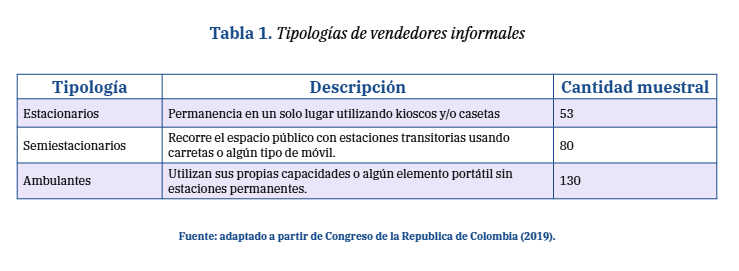
), conformada por cuarenta preguntas que incluyeron variables de tipo demográfico, socioeconómicas y de percepción con respecto a la política pública. Este instrumento fue validado por expertos en la temática, para reconocer su grado de confiabilidad (alfa de Cronbach mayor a 0,7). La muestra estuvo constituida por 263 personas, considerando una población finita de 820 vendedores informales (dato producto de la caracterización que tiene actualmente la entidad territorial), con un nivel de confianza representativo de 95 % y un margen de error aproximado de 5 %. Las variables del estudio fueron seleccionadas de acuerdo a la resolución sobre las estadísticas del empleo en el sector informal, adoptada por la decimoquinta Conferencia Internacional de Estadísticos del Trabajo ( ), y al Manual estadístico sobre el sector informal y el empleo informal ( ). Se advierte, además, que todas las variables se manejaron como continuas, y en algunas se hizo uso de escalas de Likert y diferencial semántico. Seguidamente, se midió el coeficiente paramétrico de la prueba t para determinar el desempeño de la variable percepción sobre la política pública en dos grupos de vendedores en dos tipologías: a) estacionarios, y b) semiestacionarios y ambulantes. Este tipo de coeficiente estadístico evalúa la existencia de diferencias, de manera significativa, entre dos grupos respecto a sus medias en un factor. Para este caso en particular, se considera una distribución con dos muestras independientes, con varianzas iguales, formulando dos tipos de hipótesis: i) nula (Ho), los grupos presentan medias iguales, por ende, no hay diferencia entre ambos; ii) alternativa (H1), los grupos no tienen medias iguales, lo que representa que hay una diferencia entre estos. En la ecuación 1
(1)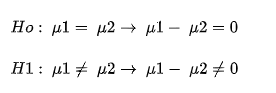
se presentan las relaciones esperadas.
Lo anterior permitió corroborar las diferencias o similitudes con respecto a lo que perciben los vendedores sobre lo planteado en la política pública. Finalmente se calculó el efecto ( Creswell, 2013 ), para reconocer la fuerza de la diferencia entre las dos medias a través de la ecuación 2
(2)
. Cerrando esta fase, se identificó una segmentación de la población de vendedores a partir de las preguntas de tipología diferencial semántica, utilizando algunos atributos relacionados con la percepción de estos sobre dicho documento. Para ello se usó una técnica por conglomerados jerárquicos de carácter exploratorio, permitiendo la búsqueda de la homogeneidad máxima entre los elementos de cada grupo (intrasimilitud) y las diferencias entre las demás agrupaciones conformadas (interdisimilitud).
En el enfoque cualitativo se determinaron seis grupos focales, es decir, tres por cada tipología de vendedores informales (semiestacionarios y ambulantes), los cuales se conformaron asumiendo criterios de exclusión e inclusión relacionados con el principio de la voluntariedad participativa, los años de labor comercial en el espacio público y la intervención activa durante las sesiones. Posteriormente, se hizo el análisis de contenido de los discursos del consenso de los participantes a partir de lo expuesto en Barrie et al. (2023) , con el fin de plantear ajustes que se deben realizar a la política pública pendiente de aprobación, a la luz de las condiciones encontradas y la teoría establecida. La interacción con los datos, es decir, el análisis intertemático, se realizó en MS Excel ( Priya, 2021 ). El investigador, apoyado del software Atlas.Ti v. 24, creó una red semántica para entender algunas relaciones entre estos acuerdos propuestos. Se determinó, dentro de todo el análisis, el uso de la triangulación de datos ( Bryman, 2008 ) como una estrategia metodológica para superar los sesgos de cualquier enfoque reconocido. Este método permitió validar cualitativamente las razones de los ajustes del documento desde las realidades socioeconómicas de la población objeto de estudio, determinadas por la encuesta.
Resultados
La distribución de la venta informal en la ciudad presenta considerables aglomeraciones especialmente en dos puntos críticos —los parques Plaza Pizarro y San Francisco, ubicados sobre las carreras 11 y 12, entre calles 13 y 19, y entre la carrera 13 y la 14, respectivamente—, como puntos focales de venta de productos de consumo masivo (alimentos) y de uso (prendas de vestir). Otro escenario con gran afluencia de vendedores informales es la plaza de mercado La Concordia, la cual concentra a su alrededor una cantidad aproximada de treinta vendedores de frutas y verduras en móviles. Por su parte, en la plaza La Satélite, sobre la carrera 11 (vía vehicular), se asientan vendedores de alimentos, especialmente de aguacates y frutas de cosecha. A pesar de que los vendedores informales son conscientes de los traumatismos que causan al invadir el espacio público, el 80 % cuestiona la redistribución de algunas calles en el municipio, las cuales han sido reducidas en su extensión (ancho), para la conformación de zonas azules de parqueo de motocicletas o zonas de descargue de mercancía. Según refieren, este tipo de acciones también minimiza la movilidad de las personas cuando circulan por los andenes del centro de la ciudad. En ciertos momentos del día es excesiva la cantidad de vehículos estacionados en estas zonas, que muchas veces obstaculizan las rampas de acceso al andén, e inclusive se estacionan sobre este. Es así como la informalidad ha provocado una ocupación desmedida del espacio público, no solamente afectando la imagen de la ciudad, sino el tránsito vehicular y peatonal. Frente a este escenario, se debate si la política pública será suficiente para mejorar las condiciones de movilidad a largo plazo o solo favorecerá la ampliación de la brecha entre la formalidad y la informalidad, debido a que muchos individuos estarán dispuestos a ser cobijados por este mecanismo legal para poder optimizar sus condiciones de vida, con algún apoyo o beneficio. Los estudios en otros municipios no han dado los resultados esperados, y la venta callejera h a proliferado de forma consistente. Esto puede estar también ligado a la pobreza monetaria creciente, si se destacan las cifras de desempleo y las pocas oportunidades laborales, que hacen que cada persona sin opciones opte por algún camino para tener una fuente de ingresos. De ahí que, en el territorio, deberían estructurarse y ejecutarse programas de emprendimiento que le apuesten a favorecer la creación de empresa formal, y por ende a la empleabilidad. Los vendedores informales del municipio se organizan en seis rangos etarios, entre 18 y 22 años (15 %), de 23 a 31 años (19 %), de 32 a 40 años (29 %), de 41 a 49 años (20 %), de 50 a 58 años (8 %), y de 59 a 70 años (9 %). A pesar de que todos los integrantes de la población se encuentran dentro de rangos de edad productiva, se verifica una proporción considerable de personas (aproximadamente el 37 %) con mayores probabilidades de no conseguir un empleo formal debido a su edad (más de 41 años), lo que los obliga a tener que desarrollar emprendimientos informales para subsistir. También se corroboró que, de cada diez vendedores, dos están en edad de pensionarse, pero no han cumplido con la formalidad, a nivel normativo, para acceder a su ingreso de jubilación, y por ende, han tenido que seguir laborando a pesar de sus problemas de salud y sus condiciones físicas. Se corroboró la existencia de menores de edad, en algunos casos, quienes acompañan a sus padres o familiares para el desarrollo de las actividades comerciales en espacio público. Con todo, la delimitación del estudio solo abarcó el trabajo de campo con mayores de edad, y al no tener el consentimiento informado de los acudientes de los infantes, no se profundizó sobre las razones de su presencia dentro del esquema de la venta informal. Aun así, como un proceso de observación, se calculó que en una razón de cuatro de cada diez puntos informales hay al menos la presencia de un menor de edad desarrollando actividades de entrega de producto y manejo de caja menor. También se menciona que, de cada diez vendedores informales en las calles, seis corresponden a personas del género femenino. La mayor parte de la población objeto de estudio proviene de la ciudad de Florencia (80 %) y el resto procede de otros municipios del departamento del Caquetá y de regiones cercanas como Huila, Tolima y Bogotá. La conformación familiar del 60 % de la población es en promedio de seis integrantes (entre cónyuge, hijos, padres y demás familiares). Se constató la presencia de familias que tienen diferentes puntos de venta informal en la ciudad, proporción que se acerca al 35 %. Además, se evidencia una práctica comercial relacionada con el arrendamiento de móviles o exhibidores por terceros a semiestacionarios, quienes presuntamente podrían estar lucrando con opciones de ocupación del espacio público en zonas estratégicas de la ciudad. Esto quedó en evidencia debido a que, para una tercera parte de los encuestados, se determinó un patrón de respuestas o expresiones relacionadas a opciones como “no es mía la carreta” y “yo la arriendo”. A nivel educativo, no se presenta mayor diferencia entre los grupos. Solo se identificaron tres casos de formación técnica y tecnológica, es decir, el 1,1 % del total de la muestra. El resto de la pob lación se distribuye proporcionalmente en: 30 % con estudios hasta educación media, 48,9 % con educación primaria sin finalizar, y 20 % con educación primaria finalizada. También se reconoció que, al menos una vez en la vida, cada vendedor ha recibido alguna formación en cursos cortos, orientados a través de programas de emprendimiento con entidades como el sena , la Alcaldía de Florencia y la Cámara de Comercio. Además, solo el 10 % de la población asegura estar interesada en seguir una formación académica, mientras que la proporción restante menciona que la educación es necesaria, pero la prioridad se debe fundamentar en la generación de ingresos. A nivel de antecedentes laborales, solo el 15 % aseguró que ha tenido trabajos como subordinado en los últimos diez años, en actividades operativas como servicios generales en residencias, servicio de transporte público (taxi y mototaxismo) o albañilería. Aun así, la población está conforme, en un 90 % de los casos aproximadamente, en seguir en la informalidad en el espacio público o en aceptar un proceso de reubicación, dependiendo del nuevo lugar (35 %). De este aspecto se destaca, por un lado, el aumento de adultos mayores en edad de pensión, pero sin opciones para acceder a este derecho. Frente a esto, la cuestión es si la política pública formulada está en capacidad de favorecer estos procesos a largo plazo. También es importante precisar hasta dónde llega la responsabilidad de la entidad territorial de fomentar programas para jubilar a aquellos que nunca han cotizado en el sistema de seguridad social o han sido vinculados a trabajos mediados por un contrato. Por otro lado, se destaca una premisa frente a considerar la informalidad con un negocio lucrativo que aborda la no necesidad de asumir gastos de arrendamiento, servicios públicos y pago de impuestos. Esta dinámica puede estar ocasionando ventajas para algunas personas, que ponen a trabajar a otros en las calles en función de sus propios intereses. Esto difícilmente lo podría regular una política pública, más cuando dentro de un proceso de caracterización inicial pueden surgir ciudadanos que no corresponden a esta población, solo con el fin de lograr ciertas oportunidades. Se establecieron tres rangos de ingresos dentro de la población (valores comparados con el salario mínimo mensual legal vigente para el año 2025): personas con ingresos mensuales menores a $1 300 000 pesos colombianos (80 %), entre $1 300 001 hasta $2 600 000 (15 %), y personas con ingresos mensuales de más de $2 600 001 (5 %). Con respecto al primer grupo, los encuestados reconocen que se requiere la presencia y apoyo de la institucionalidad para que, a través de capital semilla, ellos puedan surtir su negocio y así evitar el uso de financiación a través de créditos gota a gota, sistema que impera actualmente en la ciudad como una posibilidad de solvencia para quienes no pueden acceder al sistema bancario. Lo anterior lleva a deducir también la poca existencia de sistemas de ahorro, dado que solo el 5 % de los vendedores aseguró que destina cierta porción de sus ingresos mensuales para este fin. En esta línea, otro elemento que amerita comprensión es la conciencia hacia el emprendimiento de las personas que ejercen la venta callejera. ¿Realmente tienen las capacidades, la motivación y las intenciones de crear empresas para apoyar al sector productivo y generar empleo? Esta reflexión también se debe abordar dentro del ejercicio de formulación de la política pública, de tal forma que, con el tiempo, puedan ser autosostenibles económicamente para que sus negocios perduren a largo plazo sin la necesidad de estar solicitando periódicamente el apoyo estatal. Esta nueva idea propone verificar ajustes relacionados con el proyecto de vida de cada vendedor informal y su familia. Así como hay personas que desean profesionalizarse y laborar para un tercero, existen otros con la mentalidad de mantener su propio negocio bajo condiciones de libertad financiera y manejo del tiempo. Respecto a las condiciones sobre los permisos para operar, solo se encontró que los estacionarios (20 %) aseguran tener todos los papeles al día para evitarse inconvenientes con la Secretaría de Gobierno municipal en cuanto al manejo del espacio público. A nivel de los semiestacionarios, se corroboró que al menos el 10 % ha solicitado permisos ante la administración pública para operar, algunos tienen carnet de vendedores informales, y lo más interesante es que han expedido el certificado de registro mercantil, el permiso de uso de suelos y la certificación de bomberos para poder funcionar, desconociendo que lo público no puede ser enajenado o cedido. Más del 90 % de los semiestacionarios o am bulantes no ve con buenos ojos los procesos de reubicación, pues creen que estos son factibles, si y solo si el nuevo lugar es capaz de generar la misma afluencia de gente que en espacio público, para que los ingresos no disminuyan. Desde esta perspectiva, surge este elemento de debate. Una de las principales apuestas dentro de la política pública tiene que ver con acciones que permitan despejar los escenarios públicos. Aun así, no hay certeza, o nivel de probabilidad de éxito calculado, de que los nuevos lugares permitan a los vendedores comercializar masivamente sus productos o al menos alcanzar el mismo nivel de ventas que se generaba en el puesto anterior. En este caso, la cuestión queda para ser analizada, si es deber de la entidad territorial garantizar un aumento en los ingresos de los vendedores informales reubicados, o si esto es responsabilidad de los implicados en la venta, ejerciendo acciones estratégicas de mercadeo y servicio al cliente. Seguidamente, se calculó la diferencia entre la percepción de los vendedores estacionarios frente a los vendedores semiestacionarios y ambulantes de la ciudad en los siguientes aspectos controversiales, discutidos ante el corporativo legislativo: a) continuidad en la formación, b) acceso a capital semilla, c) proyectos de reubicación, d) continuidad para seguir en espacio público, e) deseo de ser contratado como un empleado de una empresa, f) posibilidades de formalizar, g) posibilidades de acceder a una pensión digna. Los datos calculados ( tabla 2
Tabla 2:
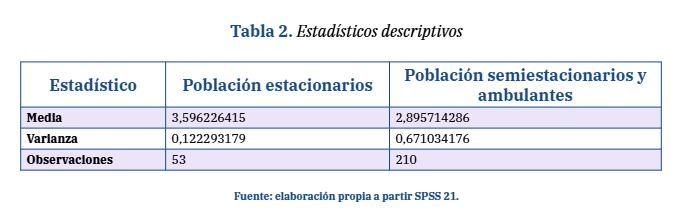
) muestran una media entre el primer grupo superior de 3,59 sobre 5 puntos posibles y una desviación de 0,12 con respecto al segundo grupo, quienes alcanzan un promedio de percepción de 2,89, que no llega a un nivel de aceptabilidad básico, con una dispersión mayor de 0,671. Con estas cifras ( tabla 3
Tabla 3:
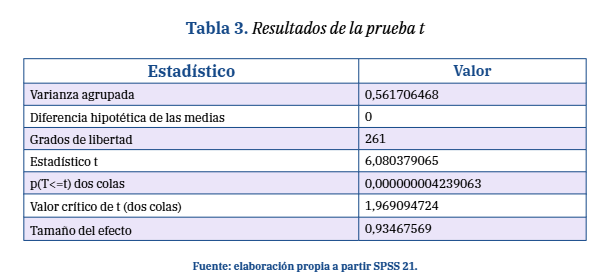
) se rechaza la hipótesis nula (Ho), es decir, se concluye que las medias de los dos grupos no son iguales, por tanto, hay una diferencia significativa entre ambos. Esto se da, en primer lugar, porque el p-valor es menor que el nivel de significancia (5 %) y, en segundo lugar, porque el estadístico t (6,08) está sobre el área o región de rechazo de la hipótesis nula. Además, se establece el tamaño total del efecto (0,934), lo que quiere decir que las medias varían menos de una desviación estándar, una respecto de la otra. Lo anterior demuestra la diferencia entre la percepción de los estacionarios sobre la de los semiestacionarios y ambulantes frente a las cuestiones para aprobar la política pública, evidenciada en mayor aceptabilidad por parte de los primeros, quienes de alguna forma ya están asegurados en un espacio donde pagan impuestos y se les ha dado el permiso para trabajar. De esta forma, dentro del documento de la política es crucial la no inclusión de los estacionarios. Por ende, todo el trabajo de análisis de la informalidad debería estar enfocado principalmente en aquellos vendedores que periódicamente están en espacio público, tanto durante el día como en la jornada nocturna, y que ocupan sin una autorización formal las calles o andenes de la ciudad. Se determinaron los segmentos de la población de vendedores informales, solución compuesta por tres agrupaciones ( tabla 4
Tabla 4:
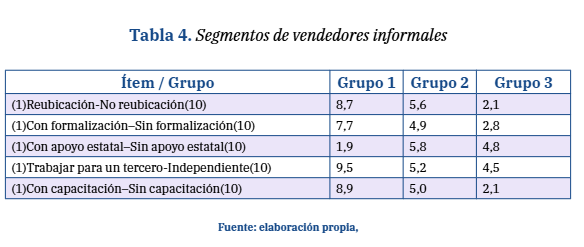
) que fueron sometidas a tres procesos de observación para lograr la máxima homogeneidad: primero, usando la técnica confirmatoria de k-medias; segundo, mediante un análisis de la varianza y la significatividad de los grupos; y tercero, mediante el análisis de las medias más o menos valoradas de los grupos. Esto último permitió definir y renombrar los segmentos conformados. A continuación, se caracteriza cada uno: Los detractores (grupo 1) son aquellos que no están de acuerdo con los principales puntos que define la política pública. Consideran la reubicación como un camino incorrecto, y a la formalización como una estrategia sin fundamentos en la realidad que vive la población, más cuando no hay un adecuado apoyo por parte de las entidades públicas para financiar sus unidades productivas. Además, responden a la necesidad de seguir trabajando en espacios públicos para no tener que entrar en otras erogaciones y no apoyan la idea de mayores acciones de formación, pues creen que el conocimiento lo tienen basado en su experiencia en las calles. Los indecisos (grupo 2) son aquellos que todavía no tienen la certeza total de que la política pública será un mecanismo adecuado para solucionar el conflicto dentro del espacio público. Son individuos que solo piden el derecho al trabajo justo, bajo sus propias capacidades y limitaciones, valorando su ética para aportar al desarrollo local sin caer en acciones ilícitas. Los defensores (grupo 3) son aquellos que solicitan la aprobación de la política pública para lograr opciones de reubicación y sobre estas regularizar sus negocios. Están conscientes de que deben seguir formándose para mejorar la gestión de sus prácticas comerciales o en lo posible participar en procesos para ingresar a laborar en empresas de la región. En la figura 1
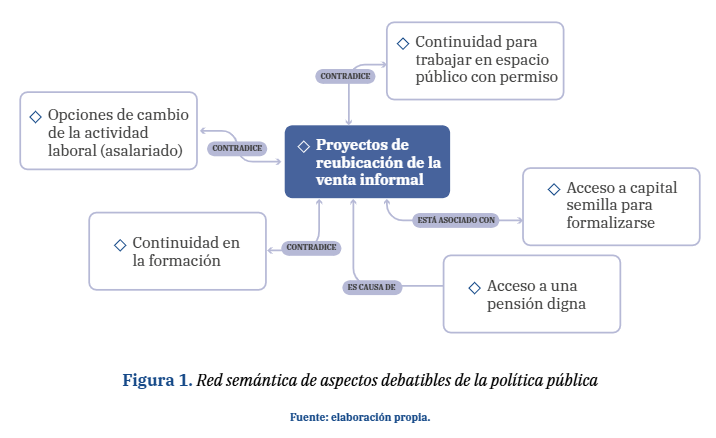
Figura 1:
se reconocen a través de una red semántica las opciones de ajustes de la política pública y sus relaciones internas. Estas surgieron como parte de un análisis del contenido de las expresiones verbales hechas por los participantes a través de ejercicios grupales. Se determinó el consenso y aquellas expresiones que garantizaban la posición de la mayoría. Para los vendedores, el debate gira en torno a la reubicación de sus labores comerciales. Frente a esto, uno de ellos manifestó: “En efecto, el municipio quiere que despejemos las calles para que los carros, las motos y las personas puedan movilizarse mejor, pero nos deben asegurar que el nuevo lugar nos permita también tener transeúntes que nos compren a diario, porque nuestros ingresos no son iguales cada día” (VE2). En otra dirección, uno de los vendedores manifestó que además de la reubicación también es necesario el apoyo estatal: “No es suficiente con llevarnos a otro lado, o encerrarnos en locales comerciales, también requerimos de capital semilla para trabajar, necesitamos que la alcaldía se responsabilice de mucho hombre y mujer de la tercera edad que no está en las condiciones para laborar, pero deben subsistir con algún apoyo económico. Principalmente nosotros queremos es que nos brinden subsidios para comprar materias primas o inventarios para luego comercializarlos, porque lo que ganamos a diario solo nos alcanza para mantener los gastos familiares y no para el ahorro o la reinversión” (VA6). Sobre este punto todos estuvieron de acuerdo y los comentarios fueron hechos en favor del papel institucional para el acceso a beneficios económicos. De esta discusión surge otro tema controversial, el del desarrollo de la formación y la asistencia técnica. Los vendedores manifiestan que los recursos se han consumido en estas prácticas educativas y no en aspectos ideales como la obtención de capital de trabajo: “Nosotros somos conscientes de recibir conocimiento para ponerlo en práctica, pero ya estamos cansados de que este tipo de capacitaciones se vuelvan una constante de legalización de fondos solo con darnos un refrigerio y llenar un listado de asistencia. Nosotros queremos que esos recursos nos los den para nosotros poder financiar nuestros negocios” (VE12). Finalmente, se mencionó la vinculación a los sistemas de empleabilidad en el municipio: “Realmente la población de vendedores informales no está en condiciones de trabajar en otras empresas de Florencia, porque, primero, no hay empleo, y segundo porque no tenemos la formación y la experiencia para al menos un puesto de escritorio. Además, puede que tengamos opciones para estudiar y lograr una carrera o al menos un técnico o tecnología, pero eso lleva tiempo y es lo que menos tenemos, nuestro deber es con nuestra familia y por eso trabajamos todos los días” (VA7). Dentro de esta perspectiva, los ajustes que se recomienda hacer a la formulación de la política pública deben estar orientados a: i) factor económico, es decir, el apoyo para fortalecer sus unidades de negocio con capital semilla; ii) promoción social a la vejez, relacionado con la posibilidad de apoyar de forma constante a la población de la tercera edad que es del colectivo y que no tiene las condiciones para seguir trabajando; y iii) la reubicación, la cual debe estar vinculada con la posibilidad de tener permisos permanentes sobre el espacio asignado.
Discusión
Se reconoce que la prioridad en estos momentos para la población objeto de estudio se centra en mejorar la fuente de ingresos. Por un lado, se constata que ellos no quieren obtener un empleo como colaboradores de una organización, su prioridad está en continuar con sus actividades, ya sea en espacio público o donde los reubiquen, y ser apoyados económicamente a través de capital semilla u otro tipo de financiación que los aleje de utilizar otras opciones como los prestamistas informales. Esta mención se relaciona con el análisis de las causas de las decisiones tomadas por la población (relación de costo-beneficio racional) por un tema de supervivencia u oportunidad ( Çakmak y Çenesiz, 2020 ; Gómez et al., 2020 ). Por otro lado, se examina el hecho de que para ellos existe una zona de confort, lo que los mantiene en un estado de tranquilidad subjetiva de acuerdo con las condiciones actuales de la actividad comercial que realizan. Para el caso de los estacionarios, se deduce que han dejado de ser informales (en su mayoría), por toda la documentación comercial legal que actualmente tienen, que los acredita como comerciantes del municipio, pero sin despejar el espacio público. Esto va en coherencia con los estudios de Williams y Lansky (2013) y Williams y Nadin (2012) , citados por Vanegas-Chinchilla et al. (2023) , y Cáceres-Mayorga y Cubillos Calderón (2024) . Así mismo, los proyectos de reubicación deben estar pensados de acuerdo con las nuevas condiciones del ordenamiento territorial del municipio y en coherencia con posibilidades de adecuación de áreas que garanticen a los vendedores informales el mismo nivel de ventas que actualmente tienen desde la ocupación de los espacios públicos. Esto aplicaría especialmente para los semiestacionarios, quienes tienen la manera para establecerse en un local. Además, se destaca que no se puede permitir más la generación de permisos en espacio público, y para los que están actualmente se debe verificar a la luz de la ley su continuidad o, en su defecto, la recuperación del mismo espacio, en sintonía con las investigaciones en materia jurídica de Palencia-Sánchez y Romero Montes (2022) , en cuanto al análisis de la confianza legítima. A partir de lo anterior, se estaría condicionando el proceso de carnetización para los vendedores. Se requiere inicialmente establecer un reconocimiento de su informalidad e incluirlos en una ruta hacia la formalización de sus actividades mercantiles, para evitar viciar al mercado de prácticas de evasión de la moral fiscal, tal como lo plantean Horodnic et al. (2021) y Horodnic et al. (2022b) . Dentro de esta ruta se deben poner en ejecución los sistemas de acceso a la seguridad social y a la pensión por vejez, definiendo mecanismos de actuación de acuerdo con la tendencia generacional de la población en el corto, mediano y largo plazo. También se puede pensar en procesos de adecuación del espacio público, pero sin sobrepasar los principios de la organización del territorio, el goce del espacio público por la ciudadanía y la imagen de ciudad que se le quiere dar a Florencia como destino ecoturístico. Esto va en sintonía con los aportes de Igwe et al. (2020) , quienes respaldan el comparativo entre empresarios informales que buscan la oportunidad en el mercado y los empresarios de la necesidad, que se ven obligados a generar opciones de generación de ingresos a partir de su interés de subsistencia. De igual forma lo describen Mugoda et al. (2020) , al referirse a los informales como ciudadanos poco garantes de derechos dentro del mundo laboral, quienes, por ende, tienden a dedicarse a prácticas ilegales para apoyar su propia economía. En definitiva, la formación para el trabajo y el desarrollo humano no se puede evitar dentro de los planes de acción de la política pública. Los vendedores deben ser sensibilizados hacia una mirada de la educación como eje promotor del desarrollo y el establecimiento de una cultura empresarial que tanto requiere el municipio desde lo expuesto por Mahadea y Khumalo (2020) . Para ello, las capacitaciones deben estar motivadas por esquemas de actualización a través de certificaciones y modelos de reconocimiento de alguna competencia o práctica en el área comercial o técnica. Esto con el fin de que los vendedores, constantemente, tengan el compromiso de renovar dichas certificaciones y reforzar esas habilidades adaptativas que han venido desarrollando producto de su experiencia en la venta callejera ( Acevedo-Navas, 2017 ). Finalmente, Florencia requiere una mirada más empresarial, ajustando su aparato productivo para fortalecer la industria y, sobre ello, fomentar la creación de negocios que le apuesten a disminuir los niveles de desempleo, como también los índices de pobreza monetaria, en concordancia con los hallazgos de Celín-Camargo et al. (2023) , Loayza (2020) y Varela-Llamas y Retamoza-Yocupicio (2023) . El emprendimiento se está convirtiendo en una opción a este flagelo social, pero todavía no es lo suficientemente atractivo para reconocerlo como una oportunidad desde la innovación ( Méndez-Lozano et al., 2015 ). En este caso, como lo plantea Narula (2020) , la actuación estatal es requerida en la creación de incentivos para que las cadenas de valor se fortalezcan, promoviendo una cultura apropiada por los mismos empresarios y emprendedores centrada en el desarrollo económico y la sostenibilidad.
Conclusiones
Existe cierta diferenciación en cuanto a la percepción de los estacionarios y el grupo de los semiestacionarios y los ambulantes sobre la política pública. El primer grupo asume una actitud aceptable con relación a su contenido, mientras que el segundo considera la necesidad de hacer ajustes que centren su atención en la financiación para el desarrollo de la actividad comercial. Los alcances de la investigación implican dar cumplimiento a la legislación colombiana a partir de las normas analizadas, además de reconocer el mérito a un compromiso formal que viene realizando el municipio de Florencia desde el año 2021 con el Ministerio del Trabajo, con el fin de tener un mecanismo legal que pueda mejorar la imagen de la ciudad y fortalecerla como destino ecoturístico, mediante la adecuación debida del espacio público. Las contribuciones en términos teóricos se relacionan con la determinación de la tipología de vendedores informales que deberían beneficiarse de la política pública, además del reconocimiento de factores que pueden ser cruciales para disminuir la informalidad. A nivel práctico, se destaca el desarrollo metodológico de diseño mixto utilizado para complementar los resultados de los paramétricos calculados. Las limitaciones del estudio están relacionadas con presuntos sesgos que se pueden haber presentado en el diligenciamiento de las encuestas por parte de algunos vendedores, sobre aspectos relacionados al nivel de ingresos y a la conformación de su núcleo familiar. Esto debido a la percepción de temor advertida en un grupo pequeño de estos, relacionada con que sus registros fueran a ser indagados por instituciones como la dian y la Alcaldía de Florencia. Aun así, en cada aplicación del instrumento se les reiteró que se mantenía el grado confidencialidad y no revelación de datos personales. A nivel de líneas de investigación futuras, se debe reconocer la posibilidad de revisar qué otros orígenes puede tener la informalidad en Florencia, relacionados con acciones humanas centradas en individuos con poder adquisitivo que establecen convenios con otros, en situación de desempleo, para que ocupen el espacio público mientras venden sus productos a cambio de un arriendo o compensación por ocupar un espacio estratégico con una costumbre mercantil. Otros estudios que se pueden desarrollar giran en torno al análisis de condicionantes para fortalecer la industria y el aparato empresarial en el municipio para ampliar las opciones laborales.
Financiación
Esta publicación fue parte del proyecto Turismo gastronómico: en búsqueda del fortalecimiento de la marca Destino Florencia , financiado por la Universidad de la Amazonía.
Conflictos de interés
No existe conflicto de interés.
Declaración de uso de ia
Para la elaboración de este artículo se utilizó Notebooklm de Google (versión Año 2025), mediante interacción con prompts en español para la corrección de estilo del texto, sin sustituir el juicio crítico ni la autoría del investigador. El contenido generado fue revisado, adaptado y validado por el autor para garantizar su originalidad y pertinencia académica.
Problemática: el aumento de la venta informal en la vía pública de Florencia ha ocasionado una disminución en cuanto a su posibilidad de ser considerada un destino ecoturístico. Objetivo: determinar las condiciones de los vendedores informales en el espacio público de dicha región, estableciendo razones que justifican la desaprobación del proyecto de acuerdo de política pública. Metodología: se hizo uso de un diseño mixto, con encuestas con vendedores informales (263 participantes de 820 en total) y grupo focales, con la aplicación de paramétricos como la prueba t y el análisis de contenido. Resultados: los resultados revelan que los ajustes a la política pública deben estar orientados al perfil del vendedor informal y a aspectos relacionados con la reubicación permanente y autorizada, el apoyo económico para los negocios y para aquellas personas que no están en edad de laborar. Conclusión: los hallazgos revelan la necesidad de generar confianza en la población sobre su futuro y su proyecto de vida, con nuevas circunstancias que propendan por su bienestar y por mejorar la imagen del territorio. Contribución/originalidad: se expone una realidad social y productiva que debe ser considerada en la formulación de políticas públicas, desde el orden nacional, relacionadas con economía popular.
Problem statement: The increase in street vending in the city of Florencia has diminished its potential to be considered an ecotourism destination. Objective: To assess the conditions of informal vendors in public spaces in that region, identifying the reasons that justify the rejection of the proposed public policy agreement. Methodology: A mixed-methods design was used, involving surveys of informal vendors (263 participants out of a total of 820) and focus groups, with the application of statistical tests such as the t-test and content analysis. Results: The results reveal that adjustments to public policy must be tailored to the profile of the informal vendor and address aspects related to permanent and authorized relocation, economic support for businesses, and support for those who are not of working age. Conclusion: The findings reveal the need to build trust among the population regarding their future and life plans, under new circumstances that promote their well-being and improve the image of the region. Contribution/originality: This study highlights a social and productive reality that must be considered in the formulation of national public policies related to the popular economy.




References
Acevedo-Navas, C. (2017). El comercio informal en el centro de Barranquilla: una aproximación desde el paradigma cualitativo. Revista Científica Pensamiento y Gestión, (42), 187-214. https://doi.org/10.14482/pege.42.10471
Arruzza, C. y Bhattacharya, T. (2020). Teoría de la reproducción social. Elementos fundamentales para un feminismo marxista. Archivos de Historia del Movimiento Obrero y la Izquierda, (16), 37-69. https://doi.org/10.46688/ahmoi.n16.251
Barrie, H., McDougall, K., Miller, K., y Faulkner, D. (2023). The social value of public spaces in mixed-use high-rise buildings. Buildings and Cities, 4(1), 669–689. https://doi.org/10.5334/bc.339
Bisquerra, R. (2004). Metodología de la investigación educativa. La Muralla.
Bryman, A. (2008). Social research methods (3rd ed). Oxford University Press.
Cáceres-Mayorga, J. X. y Cubillos-Calderón, C. H. (2024). Mujeres, calles y empoderamiento. Caso: vendedoras informales de la ciudad de Ibagué (Colombia). Revista Científica Pensamiento y Gestión, (54), 25–54. https://dx.doi.org/10.14482/pege.54.158.916
Çakmak, E., y Çenesiz, M. A. (2020). Measuring the size of the informal tourism economy in Thailand. International Journal of Tourism Research, 22(5), 637-652. https://doi.org/10.1002/jtr.2362
Celín-Camargo, Y., Torres-Gómez, E. y López-González. (2023). Enfoque histórico de la interrelación entre la informalidad y el desarrollo. En Universidad del Rosario (Ed.), Economía política, filosofía e institucionalidad de la informalidad: reflexiones para los nuevos desafíos. Universidad del Rosario-CRAI. https://doi.org/10.12804/urosario9789585001923
Charmes, J. (2016). The Informal Economy: Definitions, Size, Contribution and Main Characteristics. En E. Kraemer-Mbula, y S. Wunsch-Vincent (Eds.), The Informal Economy in Developing Nations: Hidden Engine of Innovation? (pp. 13-52). Cambridge University Press. https://doi.org/10.1017/CBO9781316662076.006
Conferencia Internacional de Estadísticos del Trabajo - CIET (1993). Resolución sobre las estadísticas del empleo en el sector informal. Decimoquinta Conferencia Internacional de Estadísticos del Trabajo. Ginebra, 28 de enero de 1993.
Congreso de la República de Colombia. (2019, agosto 02). Ley 1988. https://www.suin-juriscol.gov.co/viewDocument.asp?ruta=Leyes/30037751
Creswell, J. W. (2013). Steps in conducting a scholarly mixed methods study. DBER Speaker Series, 48. https://digitalcommons.unl.edu/dberspeakers/48
Departamento Administrativo Nacional de Estadística – DANE. (2024a). Boletín técnico Ocupación informal, Trimestre móvil junio - agosto 2024. Bogotá D.C. https://www.dane.gov.co/files/operaciones/GEIH/bol-GEIHEISS-jun-ago2024.pdf
Departamento Administrativo Nacional de Estadística – DANE. (2024b). Boletín técnico Pobreza monetaria en Colombia Año 2023. Bogotá D.C. https://www.dane.gov.co/files/operaciones/PM/bol-PM-2023.pdf
Elgin, C. y Elveren A. Y. (2021). Informality, inequality, and feminization of labor. Women's Studies International Forum, 88(102505), 1-9. https://doi.org/10.1016/j.wsif.2021.102505
Franck, A. (2012). Factors motivating women’s informal micro-entrepreneurship. International Journal of Gender and Entrepreneurship, 4(1), 65-78. http://dx.doi.org/10.1108/17566261211202981
Giraldo, C. (2017). Economía popular desde abajo. Ediciones Desde Abajo.
Giraldo, C. (2022). Lo popular. Dimensiones económicas, sociales y políticas. CLACSO. https://www.clacso.org/wp-content/uploads/2022/10/Lo-popular-Giraldo.pdf
Giraldo, C., Quevedo, R., Bernal, M. y Acero, J. S. (2023). Lineamientos de política pública para la economía popular y comunitaria. A Media Cuadra, Prensa Alternativa.
Gómez, G. M., Chawla, S. y Fransen, J. (2020). Exploring the entrepreneurial ecosystem within the informal economy with a multifactor framework. En M. Iftikhar, J. Justice, y D. Audretsch (Eds.), Urban Studies and Entrepreneurship (pp. 181-202). Springer. https://doi.org/10.1007/978-3-030-15164-5_10
Hart, K. (1973). Informal income opportunities and urban employment in Ghana. The Journal of Modern African Studies, 11(1), 61-89. https://doi.org/10.1017/S0022278X00008089
Horodnic, I. A., Williams, C. C., Windebank, J., Zaiţ, A. y Ciobanu, C. I. (2021) Explaining consumer motives to purchase in the informal economy. PLoS ONE, 16(10), 1-22. https://doi.org/10.1371/journal.pone.0258686
Horodnic, I. A., Williams, C. C., Tugulea, O. y Stoian-Bobâlc, I. C. (2022a). Exploring the Demand-Side of the Informal Economy during the COVID-19 Restrictions: Lessons from Iasi, Romania. Sustainability, 14, 7228. https://doi.org/10.3390/su14127228
Horodnic, I. A., Williams, C. C. y Chițac, I. (2022b). Evaluating the relationship between sustainable development, localisation and the informal economy: evidence from Romania. Eastern Journal of European Studies, 13(2), 54-76. https://doi.org/10.47743/ejes-2022-0203
Huang, C., Yi, H., Chen, T., Xu, X. y Chen, S. (2020). Networked environmental governance: formal and informal collaborative networks in local China. Policy Studies, 43(3), 403-421. http://doi.org/10.1080/01442872.2020.1758306
Igwe, P. A., Odunukan, K., Rahman, M., Rugara, D. G. y Ochinanwata, C. (2020). How entrepreneurship ecosystem influences the development of frugal innovation and informal entrepreneurship. Thunderbird International Business Review, 62(5), 475-488. https://doi.org/10.1002/tie.22157
International Labour Organization (ILO). (2002). Women and Men in the Informal Economy: A Statistical Picture. Employment Sector, International Labour Office.
Loayza, N. V. (2020). Informalidad y crecimiento económico: Una aproximación conceptual y una aplicación al Perú. En Escuela Profesional de Economía Instituto de Investigación (Ed.), Crecimiento económico en el Perú: causas y consecuencias. Universidad de San Martín de Porres - Fondo Editorial.
Mahadea, D., y Khumalo, S. (2020). Entry into and exit from informal microenterprise entrepreneurship in a South African municipality: A tale of resilience. Journal of Developmental Entrepreneurship, 25(3), 2050020. https://doi.org/10.1142/S108494672050020X
Méndez-Lozano, R., Ramírez-Plazas, E. y Páramo-Morales, D. (2015). Aspectos culturales y socioeconómicos de los revendedores informales de minutos. Revista Científica Pensamiento y Gestión, (37), 286- 317. https://rcientificas.uninorte.edu.co/index.php/pensamiento/article/view/7189?articlesBySameAuthorPage=3
Ministerio del Interior y Ministerio del Trabajo. (2022). Anexo Técnico No. 4 del Decreto 1072 de 2015. Política de vendedores informales. Departamento Nacional de Planeación.
Mugoda, S., Esaku, S., Nakimu, R. K. y Bbaale, E. (2020). The portrait of Uganda’s informal sector: What main obstacles do the sector face? Cogent Economics and Finance, 8(1), 1843255. https://doi.org/10.1080/23322039.2020.1843255
Narula, R. (2020). Policy opportunities and challenges from the COVID-19 pandemic for economies with large informal sectors. Journal of International Business Policy, 3(3), 302-310. https://doi.org/10.1057/s42214-020-00059-5
Organización Internacional del Trabajo - OIT (2013). La medición de la informalidad: Manual estadístico sobre el sector informal y el empleo informal. https://www.ilo.org/es/publications/la-medicion-de-la-informalidad-manual-estadistico-sobre-el-sector-informal
Palencia-Sánchez, K M. y Romero-Montes, L. M. (2022). Derecho al trabajo frente al derecho al espacio público, en el marco del ordenamiento jurídico colombiano. En Corporación Universitaria del Caribe – CECAR (Ed.), Una justicia transparente: Mirada desde el Consultorio Jurídico y Centro de Conciliación de CECAR (p. 51-81). CEP – Corporación Universitaria del Caribe, CECAR. https://repositorio.cecar.edu.co/handle/cecar/3385
Priya, A. (2021). Case study methodology of qualitative research: Key attributes and navigating the conundrums in its application. Sociological Bulletin, 70(1), 94–110. https://doi.org/10.1177/0038022920970318
Rivera-Huerta, R. y López-Lira, N. (2022). Innovation in the informal sector: The case of plastic recycling firms in Mexico. African Journal of Science, Technology, Innovation and Development, 14(2), 291-301. http://dx.doi.org/10.1080/20421338.2020.1864881
Rubio-García, M. R. y Castaño-Salas, S. (2020). El excedente económico en economías periféricas: una perspectiva teórica desde los aportes de Baran, Prebisch y Furtado. Ensayos de Economía, 30(57), 75–97. https://doi.org/10.15446/ede.v30n57.86865
Suchman, M. C. (1995). Managing legitimacy: Strategic and institutional approaches. The Academy of Management Review, 20(3), 571. http://dx.doi.org/10.2307/258788
Vanegas-Chinchilla, N., González-Salazar, N. y Montoya-Hernández, A. (2023). El estudio de las organizaciones en economías informales: conceptos, antecedentes y perspectivas futuras. Innovar, 33(90), e111449. 1-26. https://doi.org/10.15446/innovar.v33n90.111449
Varela-Llamas, R. y Retamoza-Yocupicio, R. R. (2023). Informalidad laboral, crecimiento económico y gasto público en México, 2005-2019. Ensayos, Revista de Economía, 42(1), 57-82. https://doi.org/10.29105/ensayos42.1-3
Williams, C. C. y Lansky, M. A. (2013). Informal employment in developed and developing economies: Perspectives and policy responses. International Labour Review, 152(3-4), 355-380. https://doi.org/10.1111/j.1564-913X.2013.00196.x
Williams, C. C. y Nadin, S. (2012). Tackling the hidden enterprise culture: Government policies to support the formalization of informal entrepreneurship. Entrepreneurship and Regional Development, 24(9-10), 895-915. https://doi.org/10.1080/08985626.2012.742325

This work is licensed under a Creative Commons Attribution-NonCommercial-ShareAlike 4.0 International License.
The authors transfer the patrimonial rights of their article to the Escuela Superior de Administración Pública - ESAP, while retaining the moral rights to their works. Articles in the journal Administración & Desarrollo are subject to the Creative Commons Attribution-Noncommercial-ShareAlike Attribution License that allows third parties to copy, reproduce, distribute, publicly communicate the work, and create derivative works, provided that the original author is cited and acknowledged, the first publication in this journal is indicated, the work is not used for commercial purposes, and the distribution of derivative works is done under a license of the same type.
The CC BY-NC-ND license was previously used, but it was changed to CC BY-NC-SA.